Looking for a better deal on your insurance? Get a quote
Become a registered trader - Join us


Landscaping & Gardening

Top tips on all things garden design, including fencing, lawn care, planting and outdoor improvements.

Landscaping & Gardening

The Kitchen Garden: June Jobs

If you have got your kitchen garden going already, then congratulations! Hopefully you are seeing some growth and maybe even a few flowers here and there. If you have not yet planted anything out, don’t worry, it is not too late! Here’s what you need to know!

If you have got your kitchen garden going already, then congratulations! Hopefully you are seeing some growth and maybe even a few flowers here and there. If you have not yet planted anything out, don’t worry, it is not too late! Here’s what you need to know!

Get planting

It may feel as though summer is in full swing, but that doesn’t mean that you can’t get on with some more planting. Beans (runners, broad beans, French beans etc.), peas, sweetcorn, squash and outdoor cucumbers are all fine to be sown directly outside now; the milder nights and warmer days mean that you can skip trying to harden them off before planting.

Beans like a little bit of space, so aim for rows at least 40 cm apart, with spacing of 15-20 cm between each plant. Don’t forget that beans need good support; the classic wigwam of bamboo poles works well and is a good space saver.

Sweetcorn also does best planted in blocks 40+cm apart, and with two seeds per hole.

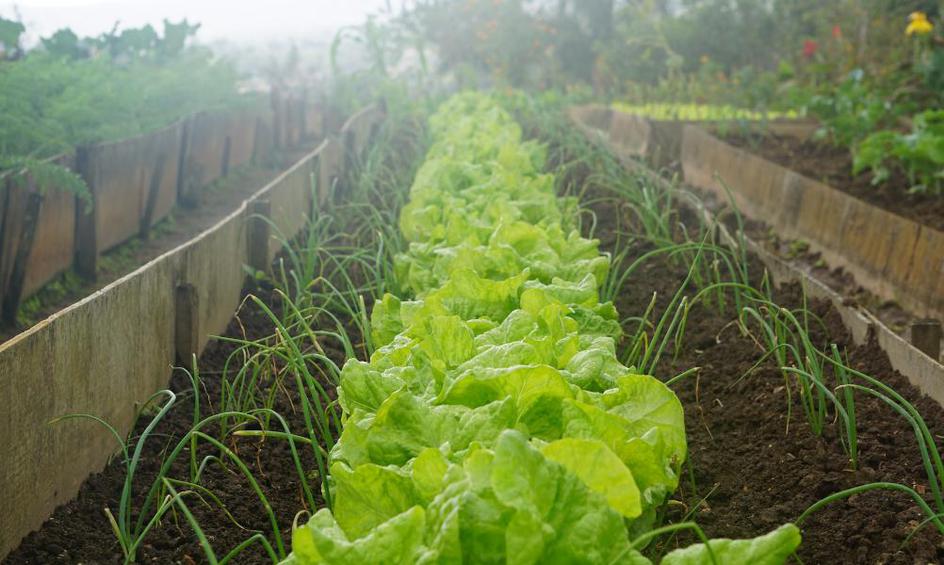
If you eat a lot of salad, it is a good idea to sow salad crops on rotation so that you have a continuing supply of your favourites. This works well with leafy crops such as lettuce, spinach and pak choi as well as radishes and spring onions.

Marrows, pumpkins and courgettes can still be planted out in early June, as can seedlings that you planted early in the year in pots.

Potatoes may seem like a more boring vegetable to grow, but there are few things as delicious as a sweet, freshly-dug, home grown potato. They are relatively easy to grow, too, and need depth rather than width in terms of space. If you don’t have a huge garden you can buy potato pots or sacks which allow you to grow your own with a limited amount of space. Norland and Yukon Gold are great, quicker maturing plants, so ideal for home growing.

Weeding and pest control

Your job isn’t done once your plants are in the ground; in fact, it is only just the beginning! Your job now is to ensure that your plants have the water and nutrients that they need to thrive, and to protect them from weeds and pests. Pest control doesn’t have to involve the use of chemicals; there are plenty of ways to keep slugs and snails at bay naturally. Fine nets can also prevent your plants from becoming home to families of caterpillars which, whilst they will one day be beautiful, will also decimate your plants in no time.

Watering

When you water your garden not only impacts their ability to absorb the water, but can attract slugs and snails, too. Evening watering tends to create a moist environment that slugs love, whilst watering first thing in the morning provides plants with the water as they need it – when there is sun - without creating a wet environment that entices slugs and snails as well as causing mildew.

Looking for inspiration? Follow Trust A Trader on Facebook or Twitter, or find a trusted local gardener to get you on the right track with your garden.

Looking for more landscaping & gardening advice?

Find clear, practical answers to common landscaping & gardening questions, helping homeowners understand everyday issues, know what checks they can carry out safely, and when it is best to contact a qualified professional.

  • Do I need a professional to design and landscape my garden?

    For simple stuff - planting, basic lawn care, a few raised beds - you can often manage it yourself. For anything involving hard landscaping, drainage, retaining walls, or changing ground levels, get a professional involved.

    Badly built retaining walls and poor drainage cause expensive problems. A landscaper will also know which materials will actually work for your soil and conditions.

  • What is the difference between a landscaper and a gardener?

    A gardener looks after your garden on an ongoing basis - mowing, pruning, planting, general upkeep. A landscaper creates the garden in the first place - patios, paths, fencing, decking, drainage, planting schemes, the whole structure. Some people do both, but they're distinct skill sets.

    If you want the garden transformed rather than maintained, a landscaper is who you need.

  • How do I get rid of an overgrown garden?

    It's often more work than it looks. Beyond cutting things back, there may be significant root systems to clear, possibly invasive species to deal with (Japanese knotweed needs specialist handling), and ground prep before any replanting can happen.

    For anything seriously overgrown, professional clearance is going to be faster, more thorough, and safer than tackling it yourself.

  • What time of year is best for garden landscaping work?

    Hard landscaping - patios, paths, decking, fencing - can happen most of the year, though very wet or frozen ground causes delays. Planting is best in spring or autumn when things establish more easily.

    If you're planning something big, book a landscaper in late winter for spring work - good ones fill up fast once the season gets going.

  • What should I do if I have Japanese knotweed in my garden?

    Take it seriously. It can damage buildings and hard surfaces, and some mortgage lenders won't lend on properties where it's present and unmanaged. You're not legally required to remove it as long as it stays within your boundary, but you are responsible for stopping it from spreading to neighbouring land.

    It needs specialist treatment - either chemical treatment over multiple growing seasons, or excavation and licensed disposal. Don't compost it or put it in your general garden waste.

  • What are the benefits of artificial grass?

    The obvious one: no mowing. It stays looking decent all year and doesn't turn to mud in winter, which is a real plus for households with kids or dogs. Modern artificial grass is much more realistic than it used to be and holds its colour well. Worth knowing though: it gets noticeably hot in direct sun, needs occasional brushing, and is made from plastic that can't currently be recycled at end of life.

    It's a great fit for a low-maintenance, practical space - less so if the environmental benefits of a real lawn matter to you.

  • How can I make my garden low-maintenance?

    Cut down the amount of lawn first - it needs more regular attention than almost anything else. Swapping sections for hard landscaping or planted beds with ground-cover plants makes a real difference.

    Pick plants that suit your soil and aspect - ones that are happy where they are will largely look after themselves once established.

    A thick bark mulch layer keeps weeds down and holds moisture. A drip irrigation system on a timer removes another regular task. A good landscaper can design a scheme specifically around low maintenance rather than just what looks attractive.

  • Do I need planning permission for decking, a pergola, or a garden room?

    Decking is usually fine under Permitted Development as long as it's no more than 30cm above ground and doesn't cover more than half the garden. Open pergolas are generally okay - but start enclosing them with a roof and sides and they get treated differently.

    Garden rooms are classed as outbuildings: permitted if single-storey, within size limits, not used as living accommodation, and set back properly from boundaries. Listed buildings are a different matter - any structure nearby needs listed building consent. If you're not sure, a quick inquiry to your local planning authority will give you a clear answer before you spend anything.

Have a question about TrustATrader?

If you have a question in relation to TrustATrader specifically, please check out the TrustATrader FAQs, with separate lists tailored to consumers and tradespeople. Alternatively, get in touch with our team. We're happy to help!